Studio Gang
Founded and led by Jeanne Gang, Studio Gang is an architecture and urban design practice headquartered in Chicago with offices in New York, San Francisco, and Paris.
We help people, organizations, and cities design their futures.
Studio Gang and sauerbruch hutton have been selected to redesign German House in New York!
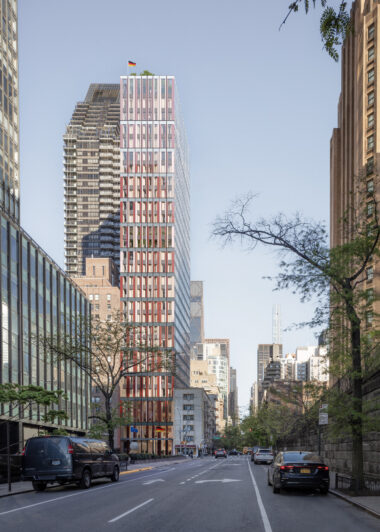
Located just north of the United Nations, German House is home to Germany’s Permanent Mission to the United Nations, Consulate General, and their affiliated cultural partners. Designed by sauerbruch hutton, the redesign will extend the life of the existing structure while optimizing its environmental performance, enhancing staff and visitor experience through strategic program changes, and transforming the building’s façade. Studio Gang will serve as General Planner and Architect of Record, leading the project’s delivery and ensuring it is executed to the highest quality.
We want to live in a world where people actively support one another as part of our planet’s greater network of living things. We believe that as architects, we have a critical role to play in creating places that support environmental resiliency, foster equity and justice, and empower historically marginalized communities. Read more about our advocacy efforts.
Amplifying Cross-Disciplinary Learning in Higher Education
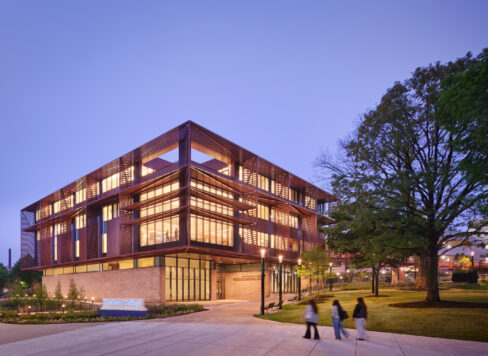
The Mary Schmidt Campbell Center for Innovation & the Arts is designed to amplify Spelman’s existing strengths in the arts and STEM (science, technology, engineering, and math), while serving as new “front porch” for the campus, inviting students to share their work and talents with the surrounding neighborhood.
Establishing a Vibrant Indoor-Outdoor Environment for Learning and Making
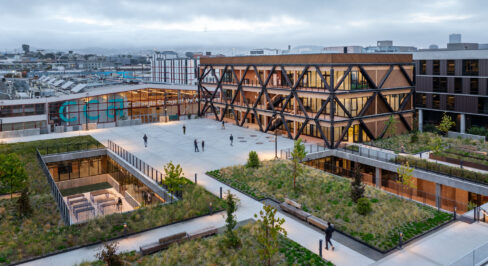
Connecting over 30 academic programs and creative disciplines for the first time in two decades, our new building for the California College of Arts creates a vibrant indoor-outdoor environment that offers a highly sustainable model for the future of art and design education.
Creating a Vertical Campus for Scholarship and Cultural Exchange
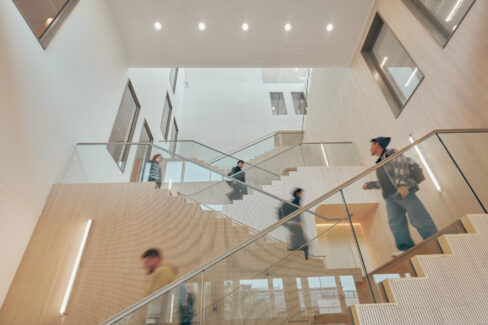
The University of Chicago John W. Boyer Center in Paris serves as a new European hub for scholarship and research in Paris’s 13th arrondissement. Built atop a compact site that spans an active railway, the architecture gives rise to a gracious campus environment where intellectual work is enlivened with social activity and biodiverse habitat.
Welcoming Visitors and Residents to Downtown Denver
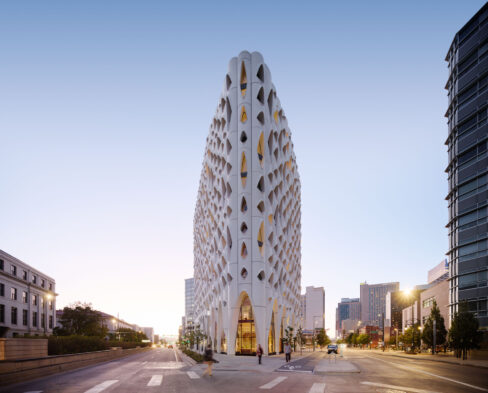
Opening itself to the city and the Rocky Mountains beyond, Populus brings guests within walking distance of Denver’s civic, arts, and commercial districts, while inviting visitors and locals to engage with the building’s ground floor and rooftop restaurants.
Encouraging Exploration at a Historic Museum
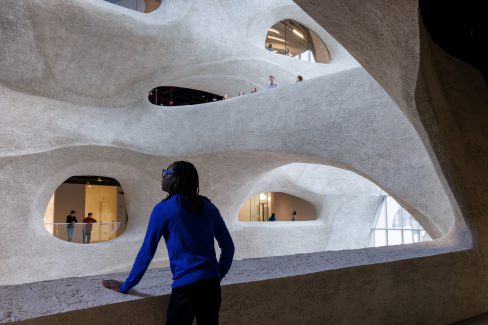
At the time of urgent need for better public understanding of science and greater access to science education, our design for the Richard Gilder Center for Science, Education, and Innovation, the latest addition to New York’s historic American Museum of Natural History forms a fluid landscape that heightens visitors’ sense of discovery and wonder.
Reimagining a Museum and Beckoning the Public Within
Creating a vibrant space for social interaction, education, and appreciation for the arts, Studio Gang’s design for the Arkansas Museum of Fine Arts transforms the formerly inward-facing building into a signature civic asset.
Jeanne Gang Leads the Way on Pay Equity
She closed the wage gap at Studio Gang, and in an op-ed for Fast Company she calls on others to do the same.
Jeanne Gang on the Importance of Bird-Friendly Building Ordinances
In an Op Ed in the Chicago Tribune, Jeanne Gang and Field Museum Senior Conservation Ecologist/Ornithologist Doug Stotz urge Chicago’s Department of Planning and Development to enact building codes that are more bird-friendly.
“For Jeanne, architecture is not just a wondrous object. It’s a catalyst for change,” writes Anna Deavere Smith in her Time 100 tribute.